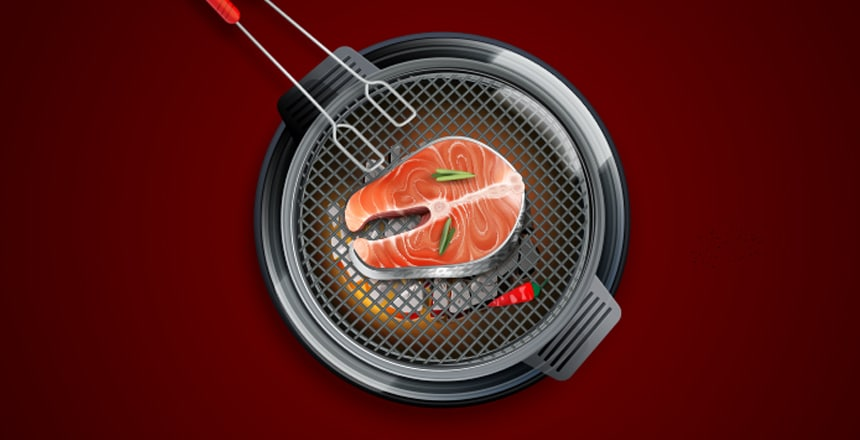
Perfectly done salmon is a culinary masterpiece. Its juicy and tender flesh is supposed to break apart effortlessly and dissolve on your tongue. But when you venture into the territory of overcooked salmon, all the symphony of flavors goes for a toss. Hence, the perfect baked salmon temperature, which is between 120 and 125 degrees Fahrenheit.
The internal temperature plays a huge role when cooking salmon or any other kind of seafood or even meat. Bake times vary from one type of food to another and even from one oven temperature to the other. So here’s all you need to know about how to coax the most delightful and delectable qualities from not just whole salmon but also salmon fillets.
Proper Baked Salmon Temperature
There are three different answers to what is the correct baked salmon temperature.
1. The FDA recommends that you cook salmon till its thickest part touches 145 degrees Fahrenheit (this is fully cooked salmon).
2. Many cooking magazines have chosen 125 degrees Fahrenheit to be the most preferred temperature for making sure your salmon become firm and silky. This applies to farmed salmon. Whereas wild salmon’s baking temperature is 120 degrees Fahrenheit. In this case, the temperature is comparatively lower because the salmon here is leaner and also more susceptible to drying out.
3. According to at-home chefs, salmon must be cooked till its flesh becomes dry so it’s easy to cut using a steak knife.
There’s no one right answer to what is the proper baked salmon temperature but 135 degrees Fahrenheit is considered to be the best temperature for consistent results.
But the temperature can vary depending on your personal preferences associated with its “doneness.”
- Well Done, Fully Cooked Salmon: >145 degrees Fahrenheit.
- Medium Salmon: Between 135 and 140 degrees Fahrenheit.
- Medium-Rare Salmon: Between 125 and 130 degrees Fahrenheit.
- Rare Salmon: <120 degrees Fahrenheit.
Salmon Cooking Time
How thick and big is the salmon or its individual fillets?
- Smaller and thinner fillets tend to cook faster than larger and thicker fillets.
Also, wild salmon will cook more quickly in comparison to farmed salmon since the former contains less fat.
So you see how the cooking or baking time is based on the thickness and size of the salmon!
How to Find Out When Salmon Is Done

Using a Thermometer
The most effective and reliable method to know when the salmon is done involves the use of a digital thermometer (this instant-read version). With an invaluable tool like this with you in your kitchen, you can almost always prevent the overcooking of fish as well as meat (or even banana bread!).
How you’re supposed to use it is first to insert its tip into the salmon’s thickest part. The tip of the thermometer should reach the center and must not come in contact with the pan.
Without Using a Thermometer (Using a Fork Instead)
Don’t have a fancy digital, instant-read thermometer? That’s alright because you can simply use a fork for the job. Just gently press down on the flesh of the salmon fillet. Does it easily separate? If yes, your salmon is done!
You can also have a look at the center of the salmon. The inside of the fish is not supposed to look raw anymore.
Although it’s best to use a thermometer to find out when salmon is cooked and ready to be savored.